
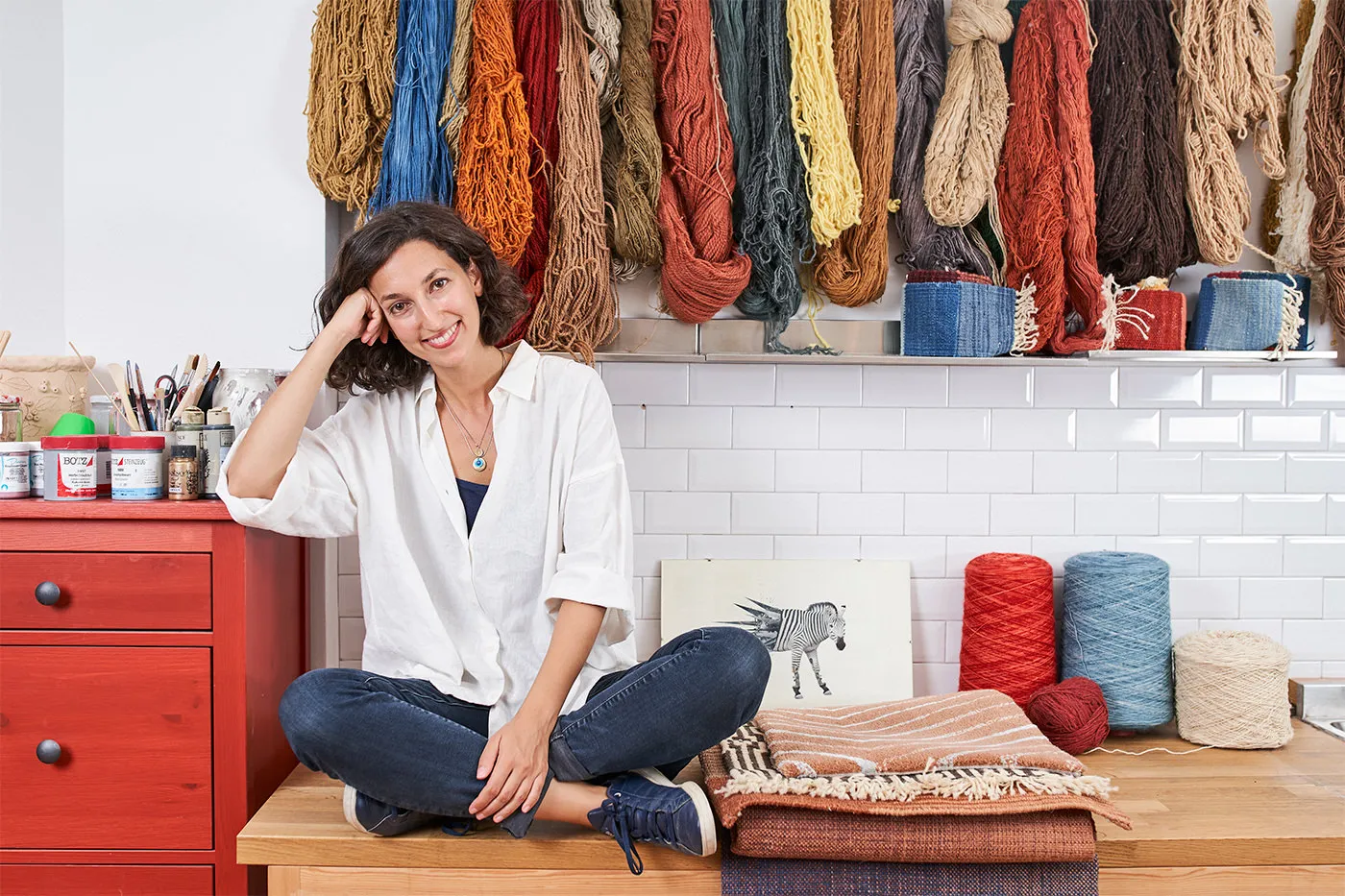
Begüm Cana Özgür combines her interest in craftsman ship and textiles. She started weaving production in her atelier in Istanbul in 2014. Her work is inspired by the rich history and cultural structure of Anatolia. She seeks to produce timeless products by bringing her own contemporary interpretations to such a traditional craft, rooted back in years. We had a conversation with Cana, who thinks that we can shape our future by adhering to tradition, on weaving practices, design process and sustainability of the craft.
Interview by Serra Oruç
Photos by Cana Özgür
You studied interior architecture, and then did your master’s degree in product design in the US. How did you cross paths with weaving?
I was interested in product design during my undergraduate program in interior architecture. The reason I chose Cranbrook Academy of Art was that it offers an interdisciplinary, workshop-based education programme. I chose the 3D design department because product design was my focus. A project I did for my graduation involved textile-based designs. The school does not evaluate the student on a drawing or a rendering. The expectation of the school is to produce exactly what you have designed. Therefore, I learnt rope dyeing, weaving and all the processes, in order to produce the textiles I wanted to use in my project.
While working at the loom, I realised that weaving was open to experimentation in a way I had never thought of before. There are many parameters in weaving. When you just change a few parameters, completely different results come out. If innovations can be made in this way why hasn’t anyone thought of doing it, I wondered. My curiosity deepened. When I returned to Türkiye, I focused on the subject and I was lucky to have all the possibilities at my disposal. The fact that weavers, materials and all the know-how were here excited me even more. I focused on weaving to make use of these.
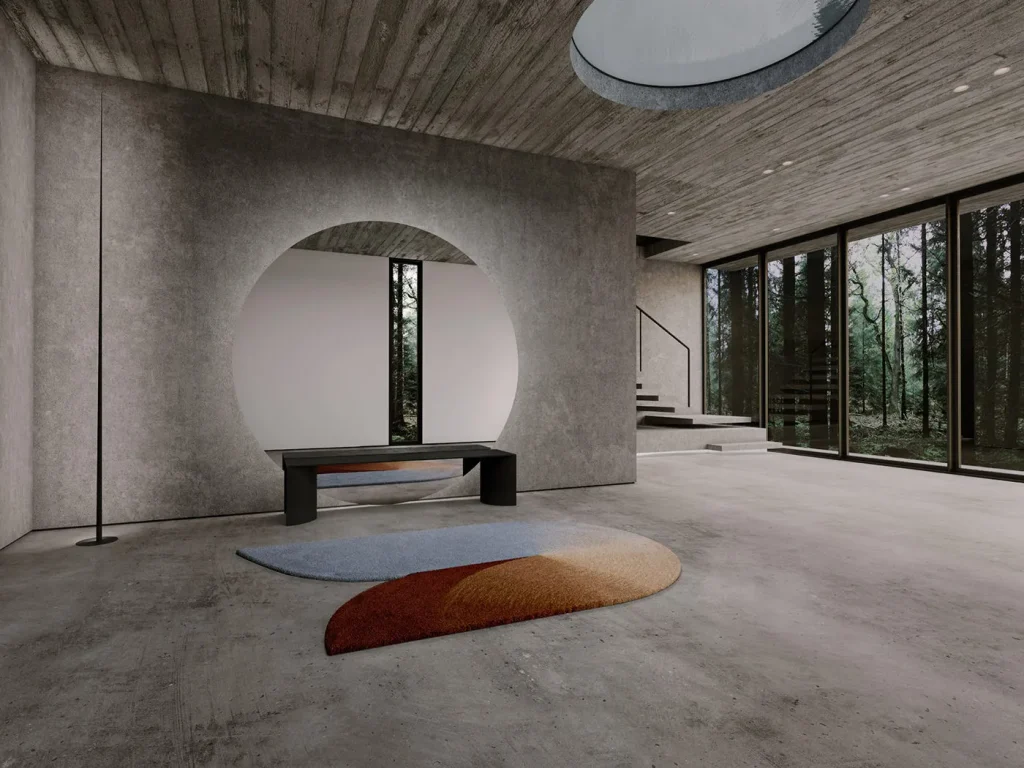
Interior Designer: Selen Ünsal
In Anatolia, weaving is traditionally passed down from mother to daughter, so the woman knows the world of motifs she has learnt from her mother. As a designer who creates contemporary interpretations, what do you experience in the production process? How does the transition of your designs to the production process take place?
For me, a product consists of 2 things: materials and the production technique. When you change one of them, the product evolves into completely different results. I create my designs by changing the materials and the technique while working on the loom in my atelier. I work more experimentally. I transfer the image resulting from the technique I’m trying onto paper and redefine it. I decide what I want to do myself, I take the sample I weave myself and go to the weaver. I have to teach the design I have created to the weaver first. I do not approach the weavers as an employer, I approach them with a collaboration-oriented approach. Not all weavers are willing to work in this way because it means learning something new. However, it works with weavers who are open to trying new things.
Do you find it difficult to find traditional weavers who are willing to adopt an experimental approach like you? Do you encounter young weavers?
It is difficult to find young weavers. Not many young people have learnt to weave. The younger generation prefers not to. Older weavers have been weaving since their childhood, but they abandon either because of age, or that the activity is not economically viable.
Many weavers, especially those who produce for wholesale carpet manufacturers, prefer designs that their hands have memorised and are used to. It is easier to make them, and since they can make them faster, they can produce more and earn more money. When I bring something new, they have to start from zero.
The weavers I work with had abandoned weaving.
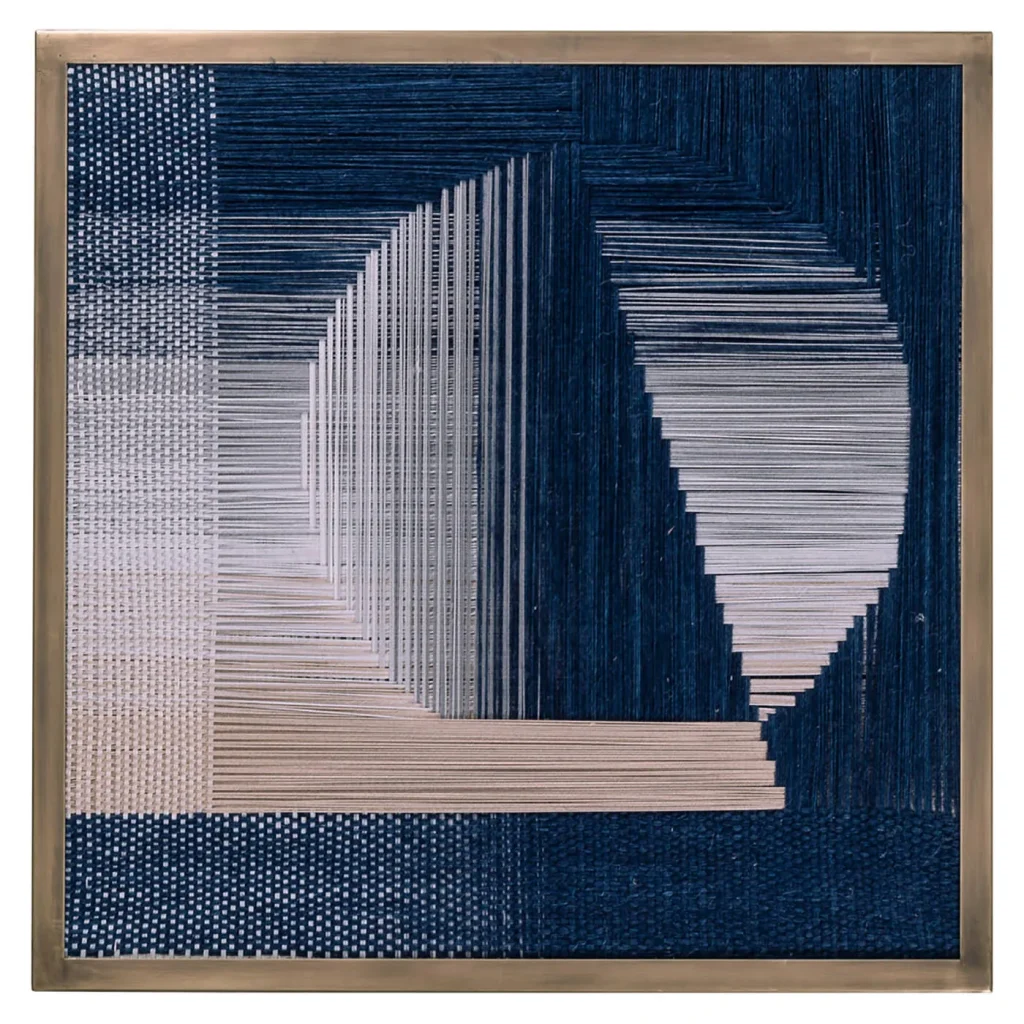
They were not weavers working for wholesale carpet manufacturers. I did not find them in the workshops. I went to their villages, asked the village headman, searched one by one to see who was weaving, and interviewed them. If we agreed and the weaver found the price suitable, she continued. Next thing you know, her neighbour realised that there was a way to earn money and wanted to get involved. The process progressed in this way. Those who had an established life usually did not want to join.
Among the young people I worked with, there was a girl of my age.
In the village of Hacıahmetli near Mut, someone had built a full-fledged weaving workshop and a dyehouse with the support of a fund. It has a dormitory, even a shower. Everything was thought of for the weavers. Production continued for one year. Some young people learnt carpet weaving, not because weaving was still alive in their village, but thanks to this course. Unfortunately, it did not last which is of the case of such projects usually. This is because they do not produce marketable products.
What effect does the fact that you know how to weave have on the production and design process?
It has a lot of effect. I think it is very important to know how to weave. If I set out to produce something from the traditional kilim weaving technique, then I would only play around with the patterns. The technique and texture are invariable. The patterns that can be made with the technique are obvious. What excites me is that when I change that technique, completely different results are achieved. Everyone looks at rugs like photographs, it is not a graphic. If I looked at it like a photograph and tried to weave this pattern, it would not be possible for me to develop a new approach. I don’t design a collection like drawing a picture, the whole process develops at the loom.
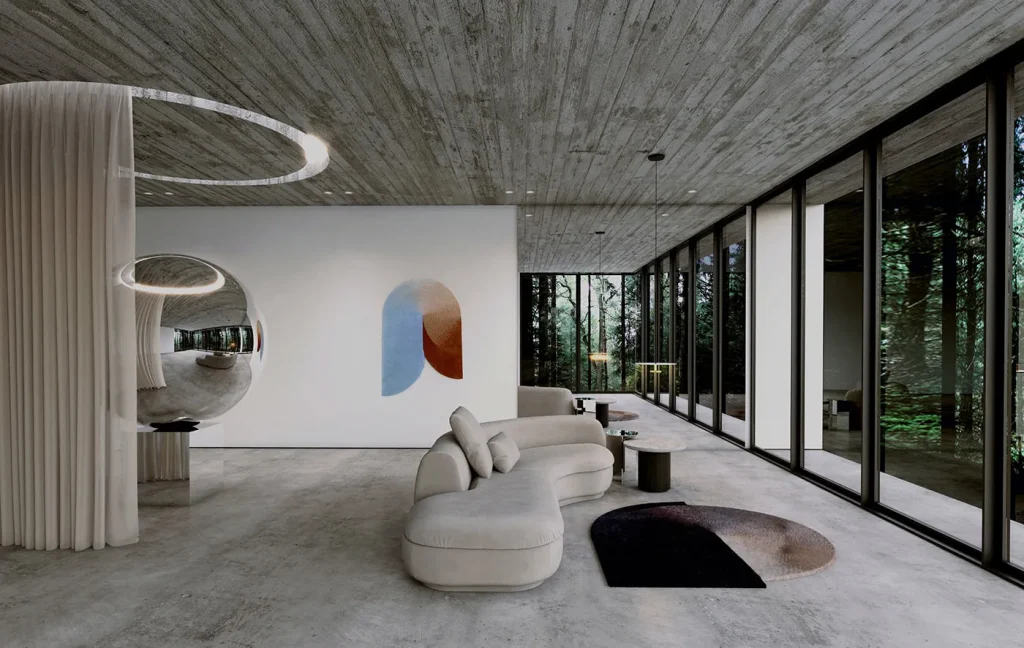
Interior Designer: Selen Ünsal
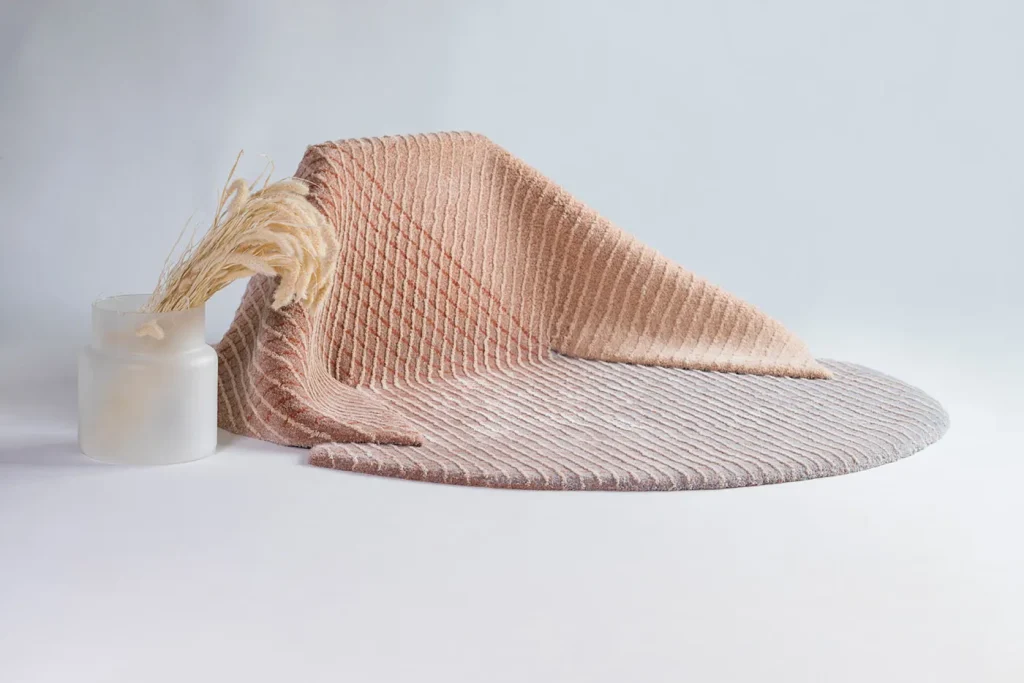
The visuals in my Haze rug collection emerged because I changed the technique. This is what I mean by experimentation, doing R&D. The technique I developed is not suitable for the conditions of past lives, but it meets today’s lifestyle. Weaving is not only about colours and patterns. If you change the thickness of the thread, you get a different result. It is even possible to change the loom. While designing, I ask questions that weavers have never thought of and I push the limits in this way.
Turkish carpets are perceived worldwide in the world as valuable. In ancient times, from Renaissance paintings to European palaces, Turkish carpets were an important status symbol. In today’s world, you are aiming to a market where contemporary designs are sold. How do you think contemporary Turkish handwoven carpets are perceived worldwide?
Those in the business know that the quality of carpets produced in India cannot be compared with the quality of Turkish carpets. However, the end consumer is not aware of this. There is no “Turkish brand”. The product is of better quality than that of its competitors, but the end buyers do not understand. When on speaks of Turkish carpets, only those with antique value still come to mind. The end buyer does not understand this difference. Since he will not give that value, you cannot ask for the price equivalent to its quality.
The rights of my “Shade collection” belongs to Nanimarquina. Nanimarquina is a brand that works with international designers and produces original collections. However, they produce their rugs in India because labour is much cheaper there. The pieces I produced in Türkiye for this collection may look naive and more artistic but when we tried to produce the same designs in India, we ended up with coarser products. We couldn’t produce anything with the same spirit and finally we had to compromise on quality. The quality is still good, but those who know can distinguish this difference.
As you will understand, the craftsmanship that has been admired for centuries still continues in Anatolia. When everything is commercialised in the market, you compromise on quality.
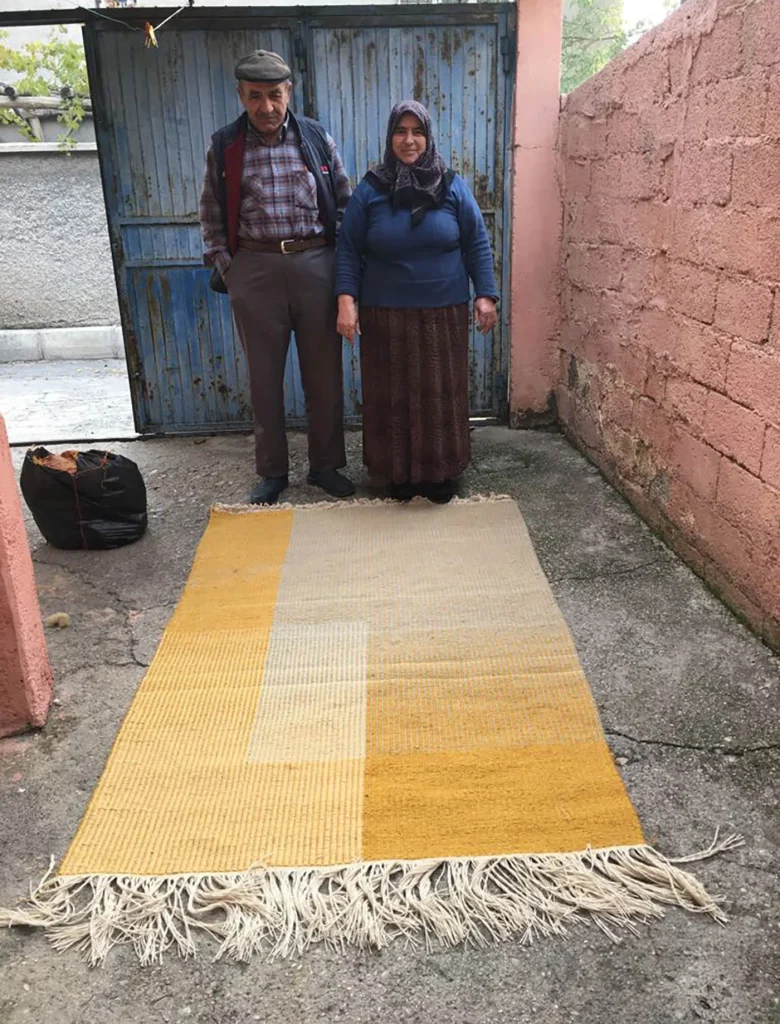
Can a perception of Turkish high quality rugs be created in the eyes of the end consumer and how can Türkiye strengthen its position in the international arena?
Under the name of “fair trade”, rugs are produced cheaply in India but sold at very high prices, the reason being the many intermediaries, a long chain from production to the end consumer. I think this is the unfair side of the business. Even though you pay the weaver a price that you think will satisfy his living conditions, there is a world of difference between it and the price in the store.
The best model for the revitalisation of production in Türkiye would be to market it ourselves. We will eliminate the intermediaries so that the money earned goes to the weaver, not to the intermediary, and contributes to this culture. Middlemen should be eliminated and a production and sales network should be established. This is possible only through branding. Manufacturing is over in Türkiye because of bulk production. I think the salvation lies in branding.
You are working on the transfer of a traditional art to the contemporary. How should the sustainability of a craft be, what are your suggestions for new generations?
I am sensitive about transferring the traditional to the contemporary without degenerating it, there is a sensitive point. Taking an Uşak carpet and changing the colours of the existing pattern to trendy colours may be one approach, removing some patterns and simplifying them may be another. I think these methods degenerate the tradition. This is a multi-layered work. Let’s continue to use the accumulation of knowledge, let’s not turn it into a design that competes with it.
There is a very rich craftsmanship culture in Türkiye. However, we cannot take this culture out of the boundaries of tradition and carry it onto today. That is why it is disappearing. The things you make with traditional techniques are no longer of interest to the new generation. We live different lives; our tastes have changed. I wouldn’t spread Milas carpets in my house, but I know the value of it. Keeping the tradition alive is not to show it by laying it out, it is necessary to keep the tradition alive without damaging it.
There is a very thin line between tradition and innovation. I think when you learn too much about tradition, it becomes difficult to look at it in an innovative way. My advantage was that I did not learn weaving on a traditional loom in America, far away from here. If I had been here, I would have learnt how people here do it and I wouldn’t have been able to break it. I didn’t know the origin, I could be experimental. In response to the conditions of that day, those techniques were developed and those products came out. In today’s world, we have other concerns, so we can produce completely different techniques and achieve different results. Some techniques did not fit those days, but they fit today. I think there are many areas that have not yet been explored.
Source: ALIVE: İHİB’s Magazine of Anatolian Rugs and Kilims, January 2023, pp. 6–11.