
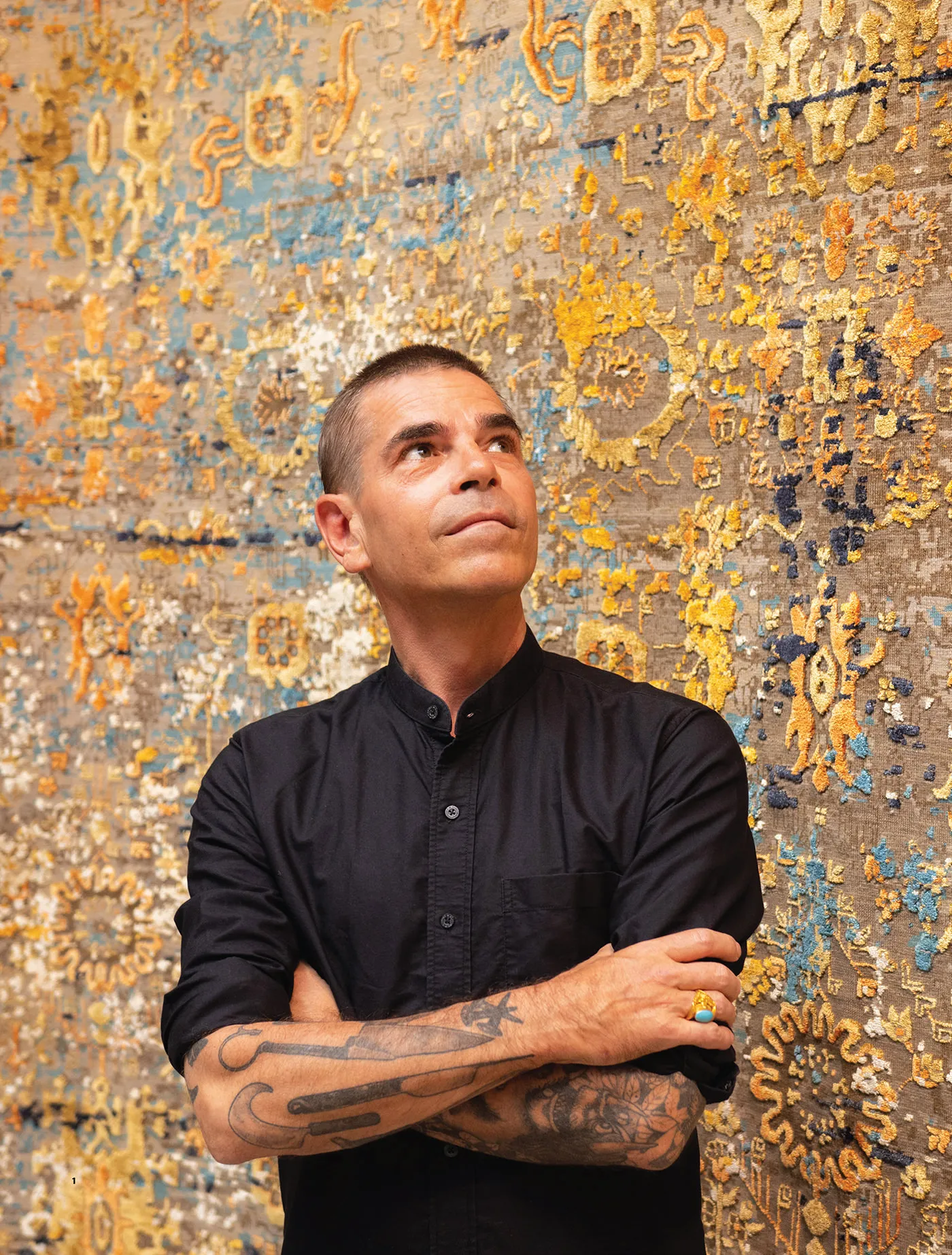
Jan Kath’s rise to eminence in the field of contemporary carpet design has been a complex process of absorbing diverse influences. But, as he explains, while remaining ever-open to ideas he has striven to maintain authenticity and originality
Interview: Serra Oruç
Shall we start with the story of how you became a designer? Do you remember the very first piece you created?
Originally, I had no intention of following in my parents’ footsteps. They ran a specialist store for fine oriental carpets in Bochum, founded by my grandfather. My father travelled the world to source new pieces. Sometimes he took me along, and often visitors came to our home, sharing adventurous stories from the world of carpets. But all of that didn’t inspire me to join the carpet trade—instead, it fuelled my wanderlust and thirst for adventure. In my early twenties, I packed my backpack, set off for India, and first organised techno parties in Goa.
After about a year on the road, I arrived in Kathmandu. There, by chance, I met a friend of my father’s in the middle of the bustling streets. We started talking, shared a coffee—back then still a rarity in Kathmandu—and he offered me a job overseeing quality control for him. It was the perfect opportunity: I wasn’t ready to return home, but I had no money left to keep travelling. And so, almost by accident, I found myself back in the carpet world.
Not long after, this friend even offered me his manufactory. Naïve as I was, I agreed. My parents supported me, even taking out a loan so we could step into the business. Suddenly, I was responsible for many weavers—yet I didn’t have the budget to hire a designer. Out of necessity, I began creating designs myself. At first, I was cautious, working on simple, monochrome fields that I thought would sell. I can’t even clearly recall my very first design any more.
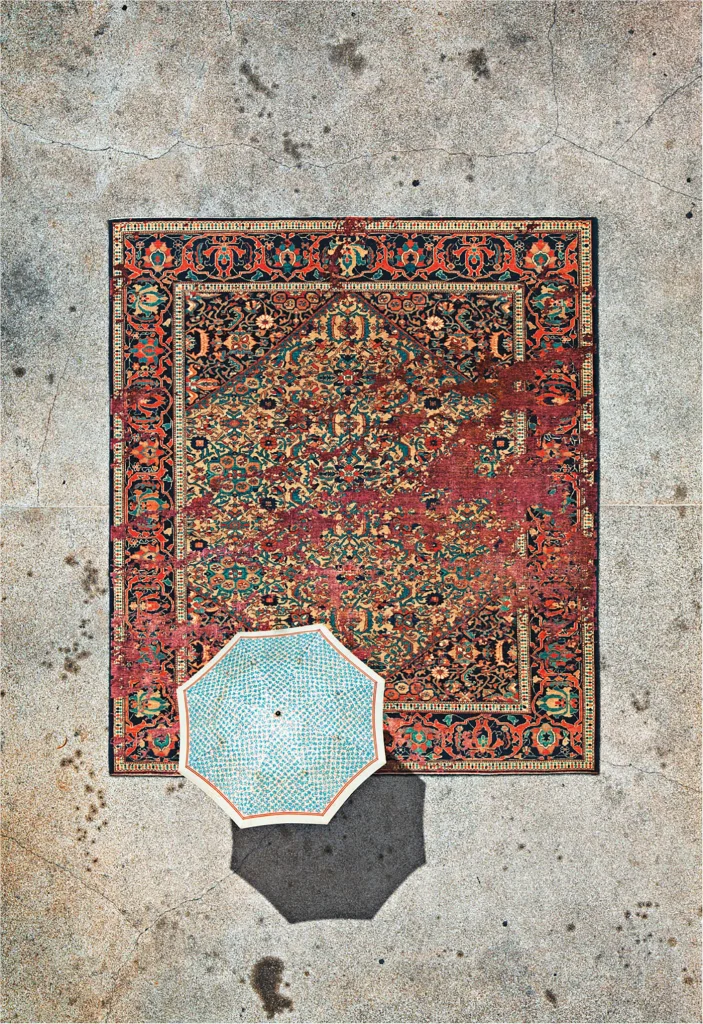
But at some point I became bolder. I thought: if I’m doing this, I should do it my way. One of my first collections was called AF—geometric patterns that I deliberately made slightly asymmetrical. Then came Deep Line, where I first experimented with depth effects. Perhaps the most defining decision, however, was to photograph my carpets in the old coking plant at the Zollverein coal mine in Essen. At that time, it was completely unusual to stage such a high-end product amid industrial ruins. Many shook their heads, wondering how I could do such a thing.
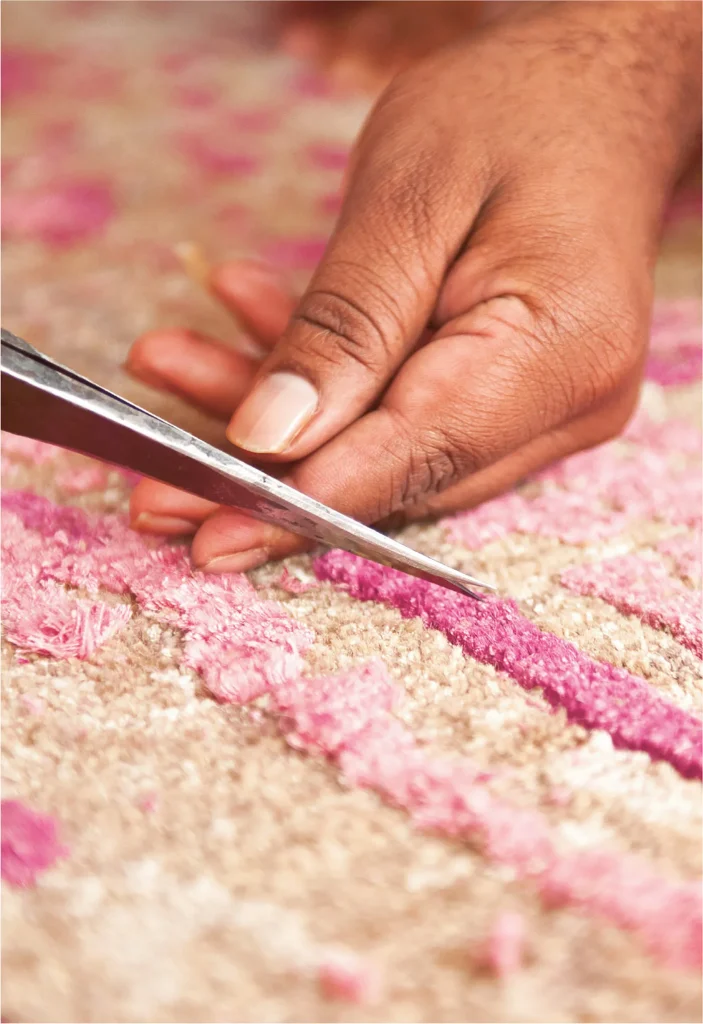
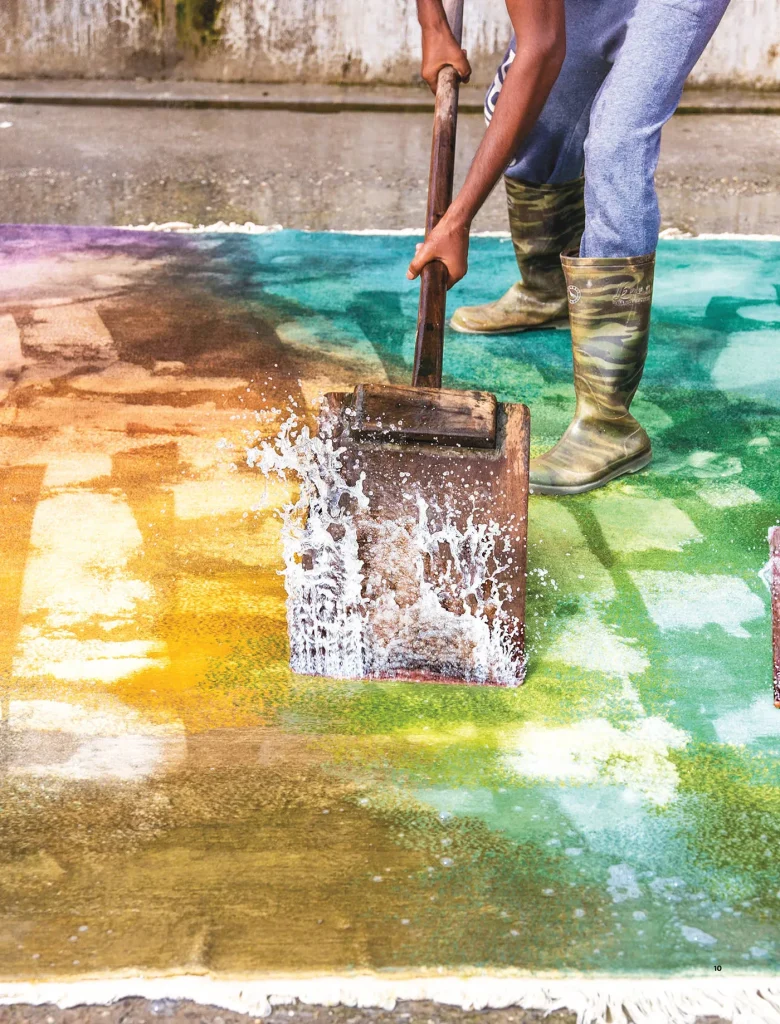
Rug finishing, Nepal
But I didn’t let it deter me. That contrast was exactly what fascinated me—and it shaped my DNA as a designer. I grew up in the Ruhr area, where industrial decay was always part of my surroundings. I played in abandoned mines, later organised concerts there, and was constantly influenced and inspired by this aesthetic of decline. These images still accompany me to this day.
What are your sources of inspiration when you decide to make a new collection?
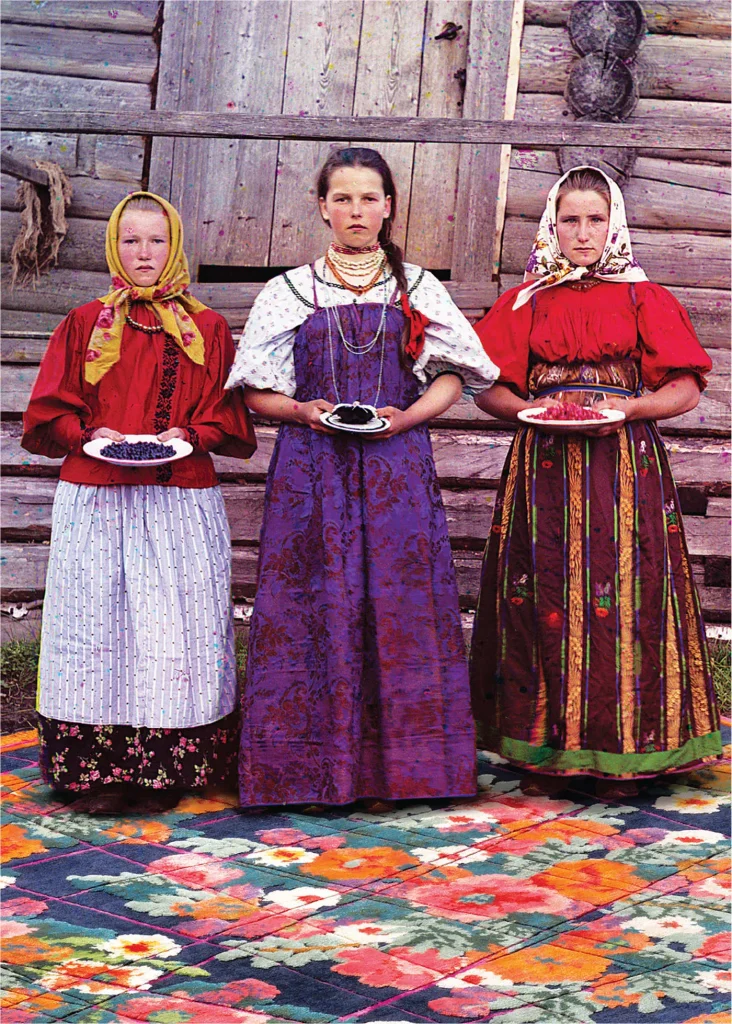
I am like a sponge, I absorb everything around me. Many images and impressions stay with me for years before they finally find their place in a collection. I remember, for example, a journey in my early twenties when I travelled on the Trans-Siberian Railway from Moscow to Mongolia. For days I sat on the train, constantly meeting new people—among them two women with brightly coloured headscarves who immediately ‘adopted’ me. They shared tea, homemade dumplings they carried still warm in their bags, and sweets. I was fascinated by their warmth, their laughter and by the patterns of their colourful scarves. Later, this experience became the starting point for my collection From Russia with Love.
Another example is the design element of lines of travel, which I use again and again, for instance in the Erased Heritage series. One evening I was sitting in front of the TV, watching a match of my hometown club, VfL Bochum. While watching, I began tracing the path of the ball across the field in my mind. At some point I looked at my scribble—and was fascinated. From that moment on, a completely new design idea emerged, one that I continue to develop to this day.
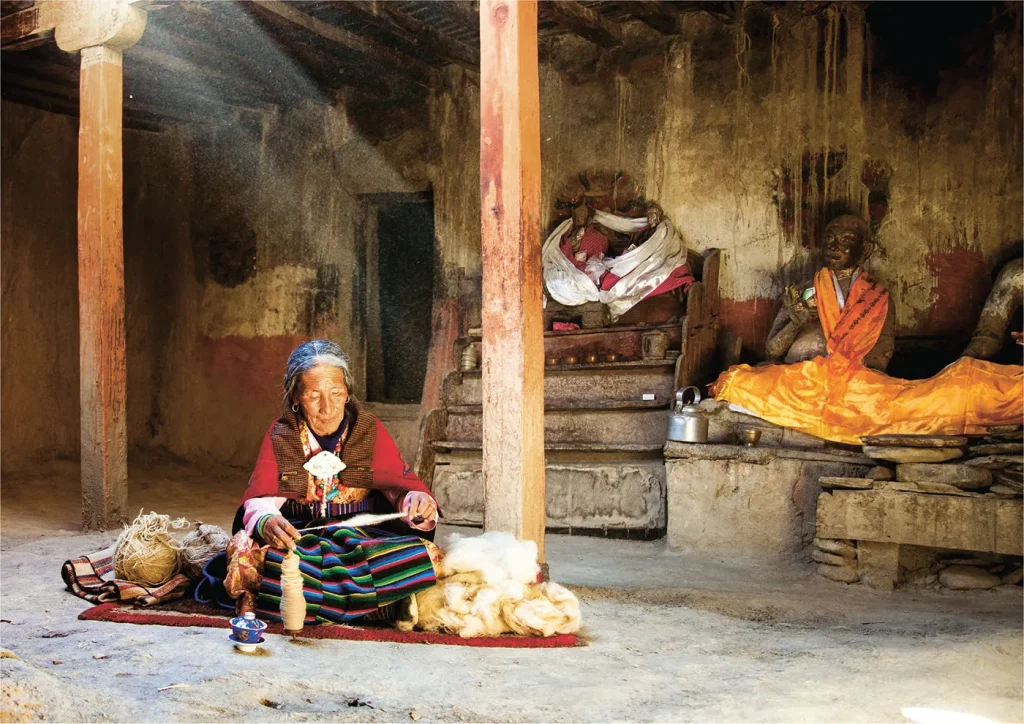
Spinning wool, Nepal
Your designs reflect different cultural stories in today’s context. Do you really believe in the power of tradition and craftmanship?
But of course! I have the utmost respect for the craftsmanship of the weavers in Kathmandu, Agra and the High Atlas Mountains. Without their skills, patience and endurance, my designs would remain nothing more than sketches on paper. It’s a deeply moving process to watch how, knot by knot, row by row, something I have envisioned slowly becomes tangible.
Every carpet tells its own story through the hands that create it. You can feel the time, the passion, and the continuity of a tradition that has been alive for centuries. In today’s fast-paced world, I find it almost healing that there are still things which cannot be rushed. A carpet needs its time, and no money in the world can really change that—apart from a few extra hours here and there.
That’s exactly the power of antique carpets and craftsmanship: they remind us that true value lies in devotion, in slowness and in authenticity. And that is what I want my designs to carry into the present context.
You are working with weavers who live in different countries. How is this reflected into your design practice?
Our work always reflects the places where our carpets are made. We collaborate with ateliers in Kathmandu, Agra and in the High Atlas Mountains. Each place brings its own unique signature. In Nepal, the workshops use the Tibetan knot, which was once brought over the mountains by refugees and is still practised today. There, and in India, the weavers work with the utmost precision, following the design literally knot by knot.
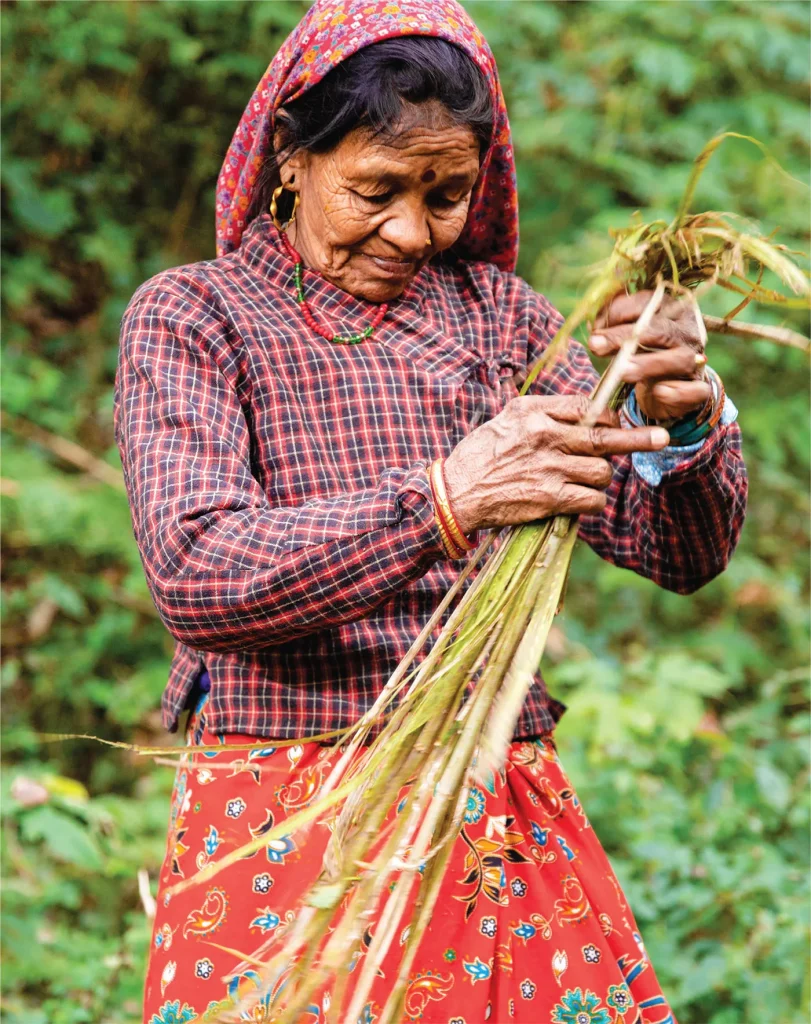
Collecting nettle fibres, Nepal
In Morocco, on the other hand, everything is much more organic—with the coarse Berber knot, a rhythm of its own emerges, giving the carpets a sense of freedom and vitality.
The materials also carry their origin within them. In Nepal we use hand-combed Himalayan highland wool, while in Morocco the wool comes directly from the Atlas Mountains, produced by the people there themselves.
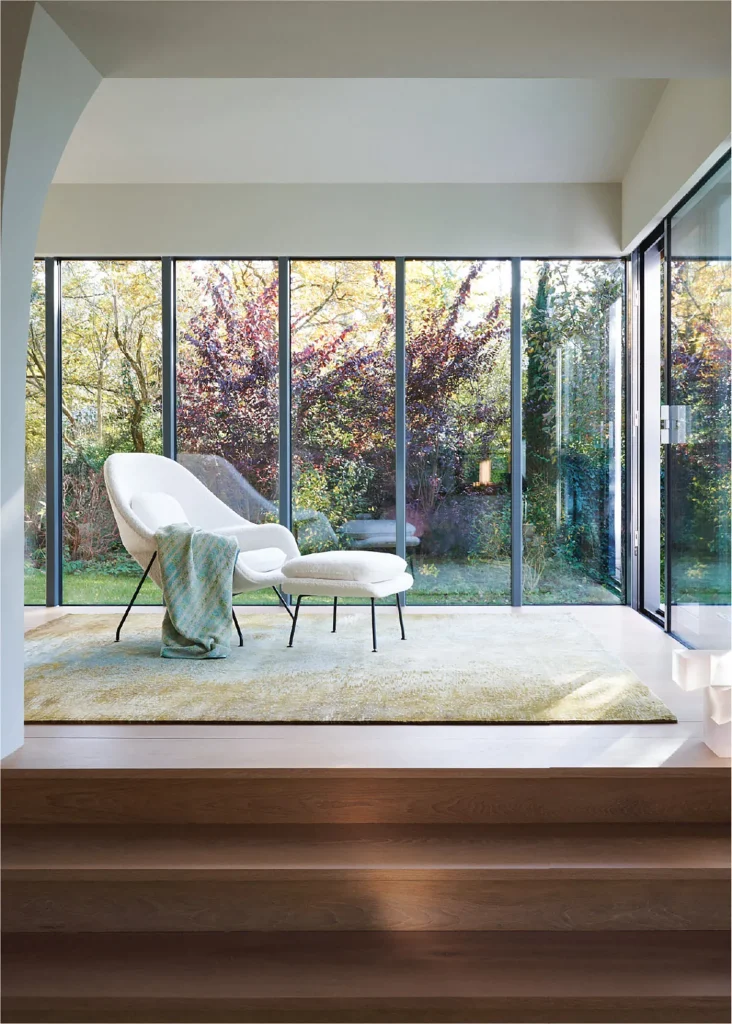
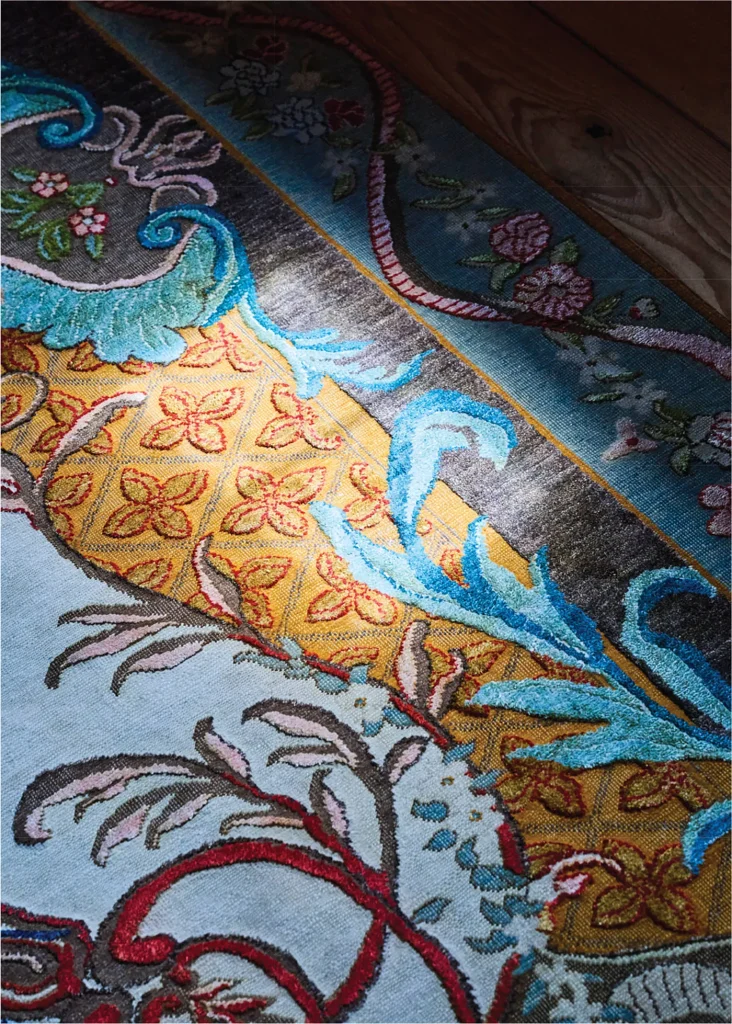
This is not an industry clouded in anonymity, but something highly individual, deeply rooted in the daily lives of the communities.
You could say: if we had one single design knotted in all three countries, we would end up with three completely different carpets. And that is precisely the beauty of it. We never switch randomly between workshops but carefully selected designs suit each specific knotting style. Some patterns gain from strictness and accuracy, others from freedom and irregularity. In this way, no copies are made, but authentic pieces with strong character—always carrying their origin visibly within them.
We are living in a world of constant change. It becomes hard to be unique with the visual bombardments of social media. What is your philosophy to differentiate your brand such a dynamic environment?
It’s less of a pressure to differentiate oneself from others, and more about staying true to our own identity and philosophy. The social media environment is moving extremely fast, with micro trends emerging from every place around the world. I believe the most important point is authenticity. This is what people care about. On these platforms we are able to show who we are, with influences which I have collected through my travels over time, but always with the focus of the tradition behind rugs and why it should move others.
One award after the other—it looks like you have a dream job. What challenges you are currently facing?
Oh yes, I consider it a great privilege to be able to practise this profession. The awards and the success are an incentive for me to keep going – I have more than enough ideas anyway, and sometimes I actually have to slow myself down so I don’t try to put everything into practice at once. I’m very impatient, almost driven, and that really shapes my work.
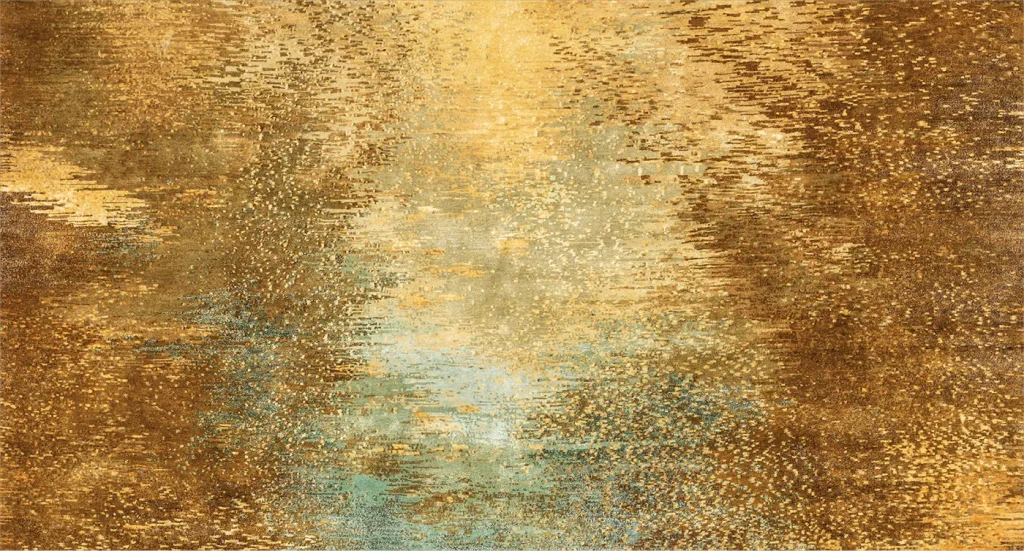
Doto rug (detail) Cyprinus collection, Jan Kath Design
The greatest challenges, however, lie in the craft itself. We are constantly searching for new talent. In a country like Nepal, there are more job opportunities today than there used to be. Many young people are drawn abroad, at first glance lured by quick money and adventure, though it often turns out later the working conditions are poor and the pay miserable. We have to show that we are a real alternative.
And we are: our workshops are regularly inspected by supervisors from the STEP label to ensure proper working conditions. We are also attractive in terms of wages. On top of that, we take care of the families of our weavers—their children go to kindergarten and later to school. I know employees we’ve worked with for decades whose children have since become doctors or lawyers. Those are success stories that make me personally especially happy.
My sons Sanchir and Adja, as well as my niece Marlene Büsing, have now joined the company. Sanchir works as a designer and together we created the Doto rug, which went on to win the Red Dot Award 2025 and the German Design Award 2026. In a world full of constant challenges and rapid change, having the next generation step in brings a fresh perspective and new energy for the future of our company.
How do you see the future of rug industry?
Today, we are witnessing a clear shift toward craftsmanship. The more digital the world becomes, the more tasks AI takes over, the stronger our longing grows for the authentic and the real. Machines don’t make mistakes—but that is precisely what makes the manual creation of a carpet so special. Even though the weavers work with the utmost precision, sometimes a knot is tied a little tighter, or a row deviates ever so slightly. In the end, you can see and feel these small traces of handwork. They carry life, time and emotion into a piece—a positive energy that you want to feel in your home. A machine-made product can never deliver that.
I am convinced that in the future we will value this even more. We will turn away from the principle of ‘always faster, always cheaper, always more’ and move toward what is genuine and true. With that, of course, comes responsibility: we must ensure fair working conditions and operate sustainably. We work with certified dyes and rely heavily on natural colours. For me, it is precisely this combination—craftsmanship, authenticity and sustainability—that represents the future of the carpet industry.
jan-kath.com
Source: ALIVE: İHİB’s Magazine of Anatolian Rugs and Kilims, January 2026, pp. 4–11.