

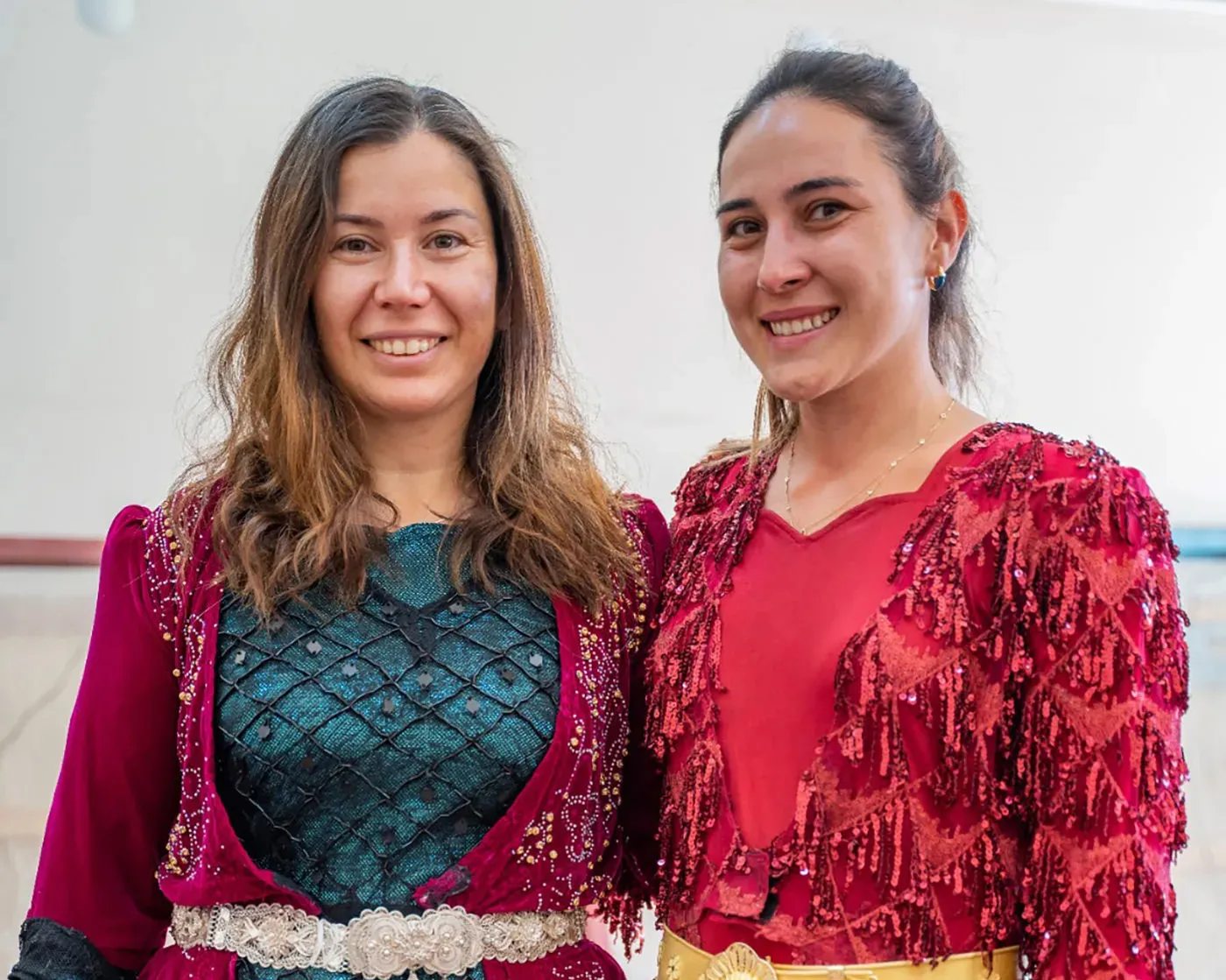
Weaving is an art that has been passed from mother to daughter for many
generations. Weavings was initially used for insulation but then developed
to other uses as technology was improved. Today, carpets have become an
important aspect of decoration. The Anatolian woman, who uses motifs
as a language of communication, transfers her feelings and thoughts into
her weavings. These stories, within the scope of intangible cultural heritage,
constitute an important source for the life and beliefs of people in the
region. It is necessary to create an archive of these values and make this
accumulation of knowledge available for contemporary designers. This
richness can enable a new language of design.
Text & Photos by Serra Oruç
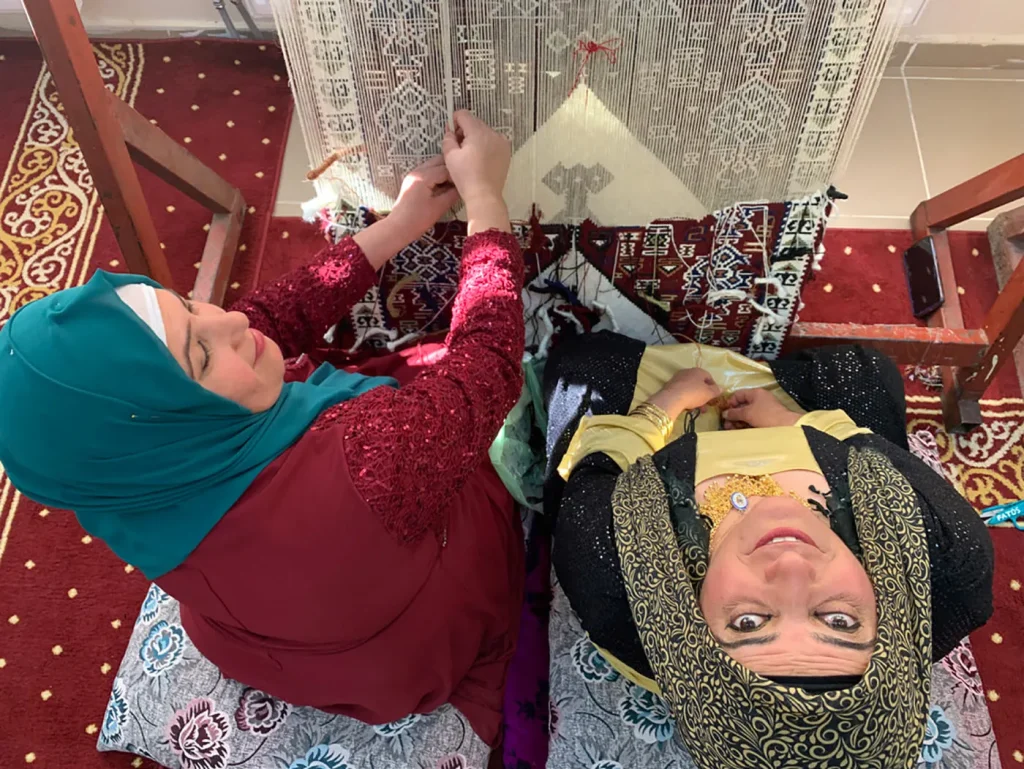
Anatolia has a rich history that has contributed to today’s heritage. All that we see and experience around us has its roots in ancient Anatolia. Weaving was firstly used for insulation but today carpets have become not only an utilitarian item, but an important aspect of decoration. Every cultural group on these lands over the years, brought their own beliefs and arts to form a unique cultural mosaic as can be witnessed through excavations.
Life in ancient times was very much based on a food economy. Searching for the fulfilment of needs led to various inventions. Human beings evolved from a hunter/gatherer lifestyle to sedentary agricultural lifestyle. Agriculture was further developed in the Neolithic Age. The people of Çatalhöyük exhibited the first examples of a productive society. Materials were shaped in line with the basic needs of the people.
Çatalhöyük’s population was one of the first to shape materials for their daily life. They learned to toil the soil and produce clay out of it. Within the scope of time, new inventions were made and production continued with glass, copper and bronze. Through archaeological findings, it becomes obvious that those articles were produced for functional reasons to meet many different needs. Weaving was meant to meet one of these needs. İt’s an undeniable fact, carpets and rugs are essential for insulation during the tough winter conditions in Anatolia.
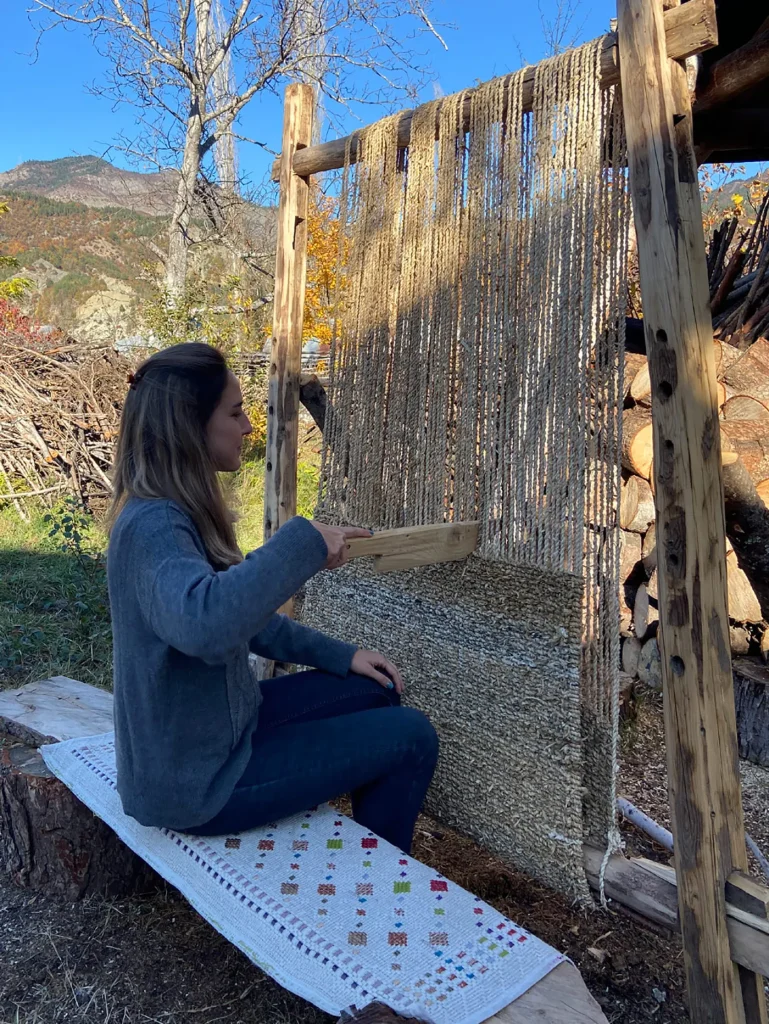
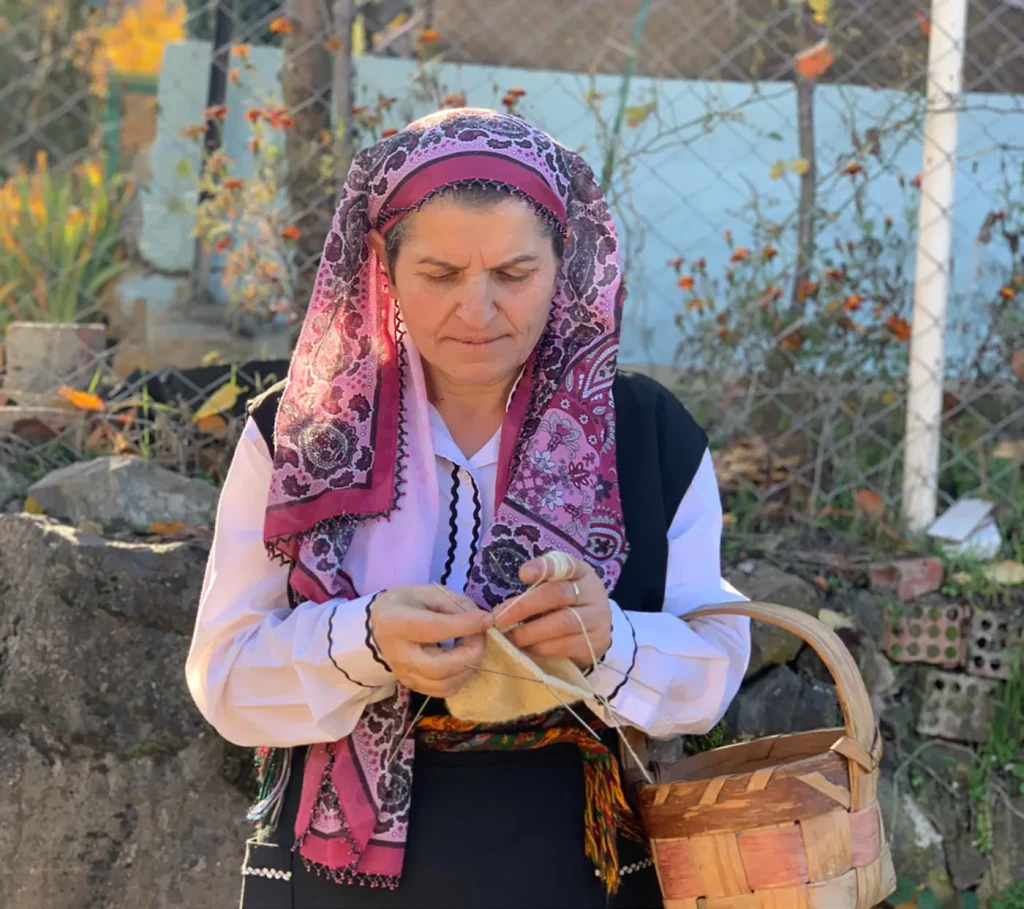
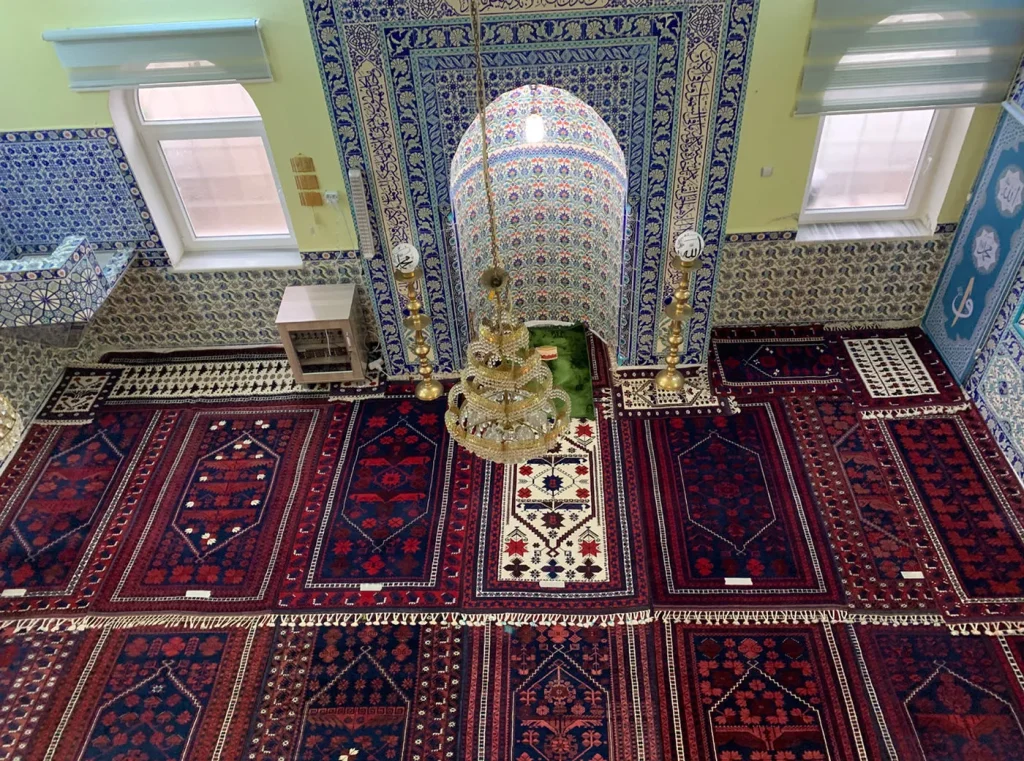
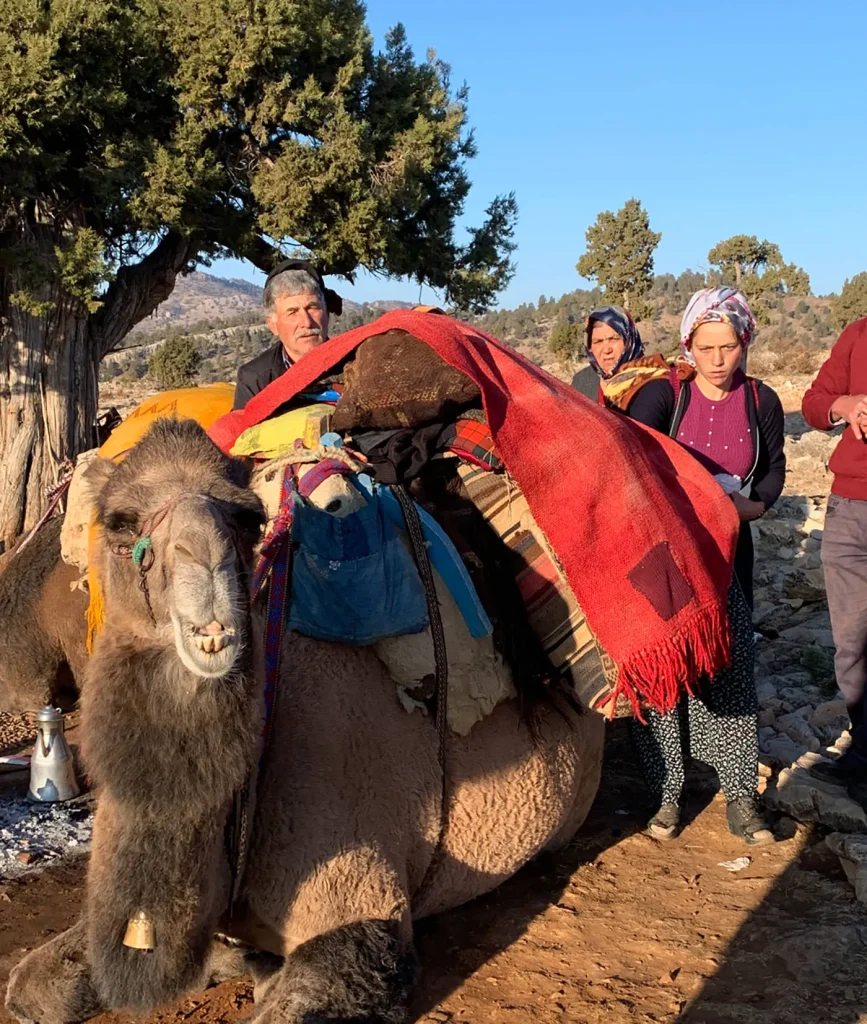
In this process of thousands of years, the types of weaving evolved and were shaped according to the principles of regional life. Regional conditions influenced the materials used and the colours preferred. The findings confirm that the first weavings were made of vegetable fibres and it is understood that animal fibres were introduced later on. The use of wool is related to the domestication of animals. Human beings who domesticated sheep and goats, started to produce durable objects with the wool they spun. Weavings made of goat hair are suitable for tents as goat hair is water resistance and sturdy enough for harsh weather conditions. Sheep wool is mainly preferred for floor coverings, sacks, saddlebags, and bag weavings. The regional unique descriptions that we come across in the weavings reflect the stories of the locals. This fairy tale world is the stylised appearance of the weaver’s observations. The Anatolian woman uses motifs as a language of communication, transmitting her feelings and her thoughts to her weavings.
When ceramics, reliefs, mosaics, wall paintings are analysed, it is unlikely that the motifs would have emerged only in the art of weaving. The art of weaving is a tradition passed down from mother to daughter in Anatolia. The weaver continued the motifs used by her teacher and refrained from changing it to ensure they continue to show respect to their ancestors. The fact that all traditions in history have an interdisciplinary principle and feed each other creates the mosaic we have today.
Belkıs Balpınar, an expert in the field, asked questions to weavers in different regions and mostly came up with the answer “we weave for traditions and customs”. Therefore, one can presume that their main goal is to learn the technique and traditional motifs. Creating a new pattern repertoire is not the priority. Today’s weaver does not know why she weaves a particular symbol, but research shows that the people who have settled in a region for a long time adopt the art of that region. The fact that communities living in certain regions are traditional and not open to innovation shows us how different ideas develop and spread among others. Patterns that have become traditional and passed down from generation to generation are still in use today. This explains why the motifs we encounter in certain regions are unique to that region. Culture transmission continues if the same symbols are used, even if the names of the symbols change. These stories, evaluated within the scope of intangible cultural heritage, constitute an important source for the life and beliefs of the people in the region.
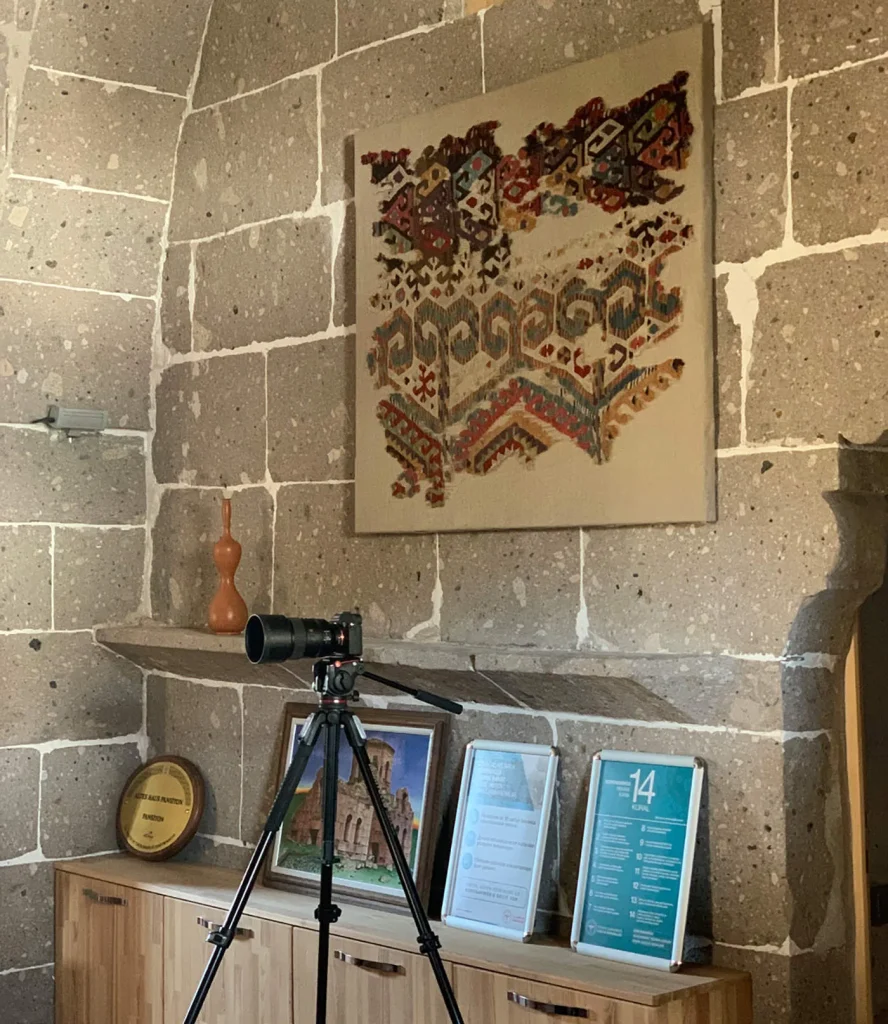
Udo Hirsch collection Güzelyurt.
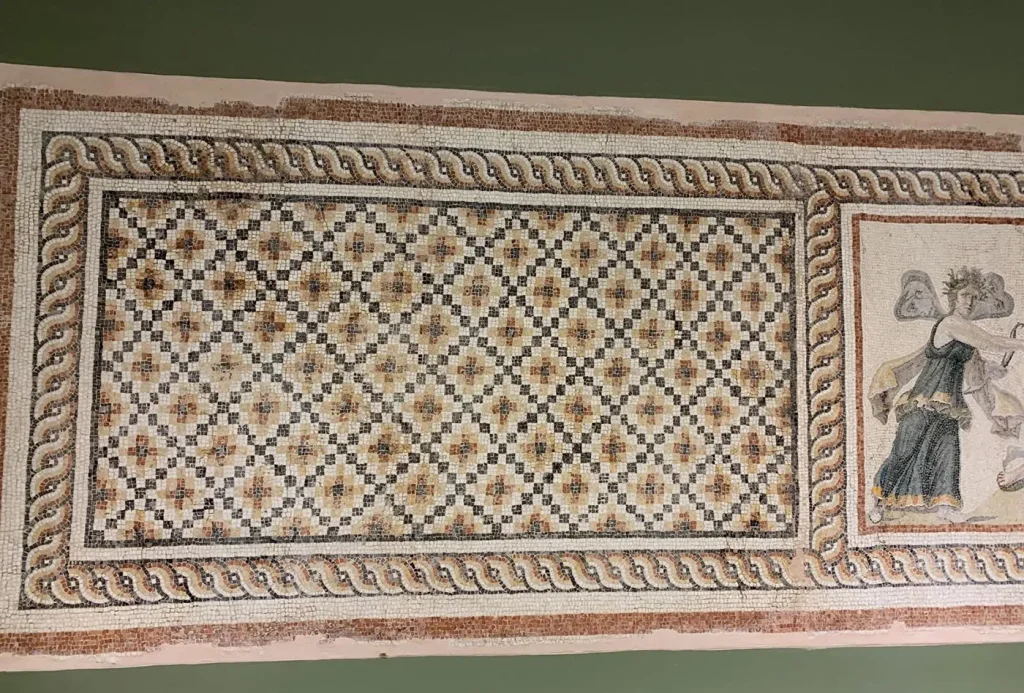
5th Century Mosaics, Hatay Archeology Museum.
As civilisations developed in ancient communities, so did their art. Human communities living in different centuries and even in different places were always in interaction with each other. This interaction once again confirms the long-established tradition of Anatolian life. Societies that were intertwined throughout the ages have left a solid cultural treasure for future generations. We should take our modern canon out to understand life in ancient times within the framework of the needs and life of the people through that period and evaluate accordingly. It is undoubtedly difficult to analyse this richness in Anatolia and find the stories of each one of them due to the nondurable nature of the archaeological findings. Thus, the continuity of cultural transmission shows us that societies, no matter where they came from, intertwined in Anatolia and adopted Anatolian life.
Anatolian traditions are a source of inspiration for many branches of art. Ceramic artists, textile artists, jewellery and clothing designers bring many Anatolian symbols back to life by interpreting them in their own language. Many Western brands still take their inspiration from these lands while most of us living these values are still not aware of it. It is necessary to create an archive of these values, to create a source and to present this accumulation of knowledge in a refined way and to create an awareness of this richness. I believe that these values should be looked into, discussed and transferred to the new generations. Being able to understand them from where we stand today will create a new motivation for us to protect this heritage, to transfer it to future generations.
Source: ALIVE: İHİB’s Magazine of Anatolian Rugs and Kilims, January 2023, pp. 50–53.