
The Fortuny Museum in Venice offers a journey through the creative mindset of the Spanish artist, couturier and polymath Mariano Fortuny y Madrazo
Author: Serra Oruç
Considered by some to be the Leonardo da Vinci of the 20th century, Mariano Fortuny y Madrazo (1871–1949) was born in Grenada, Spain. To truly understand Fortuny’s skills and his connoisseur’s eye, one must also get to know his family. Talent ran through their veins, passed down from generation to generation. His father, Mariano Fortuny y Marsal, rose to become one of the most sought-after names in the Spanish art scene. An orientalist painter, he was also well known in Italy for the studio he once owned in Rome. After his marriage to Cecilia de Madrazo, Mariano senior’s fame flourished even more.
The Madrazo family encompassed generations of artists and art critics, forming a strong network of figures who shaped the art world. Cecilia’s father, Federico, was a distinguished connoisseur of ancient fabrics and an avid music lover. As the first curator of the Prado Museum, he was also a significant force in Spanish cultural life.
Dubbed the “Leonardo da Vinci of his time,” Mariano Fortuny y Madrazo turned boundless curiosity into art, invention, and enduring beauty
Although the influence of Mariano senior was an important one for Mariano Fortuny y Madrazo, that of his mother and her family was equally strong. The milieu within which he was raised undoubtedly contributed to his artistic development. With both parents being collectors, he was surrounded by lavish textiles, rare objects and fine paintings. Even though young Mariano lost his father at the age of three, he diligently continued his father’s legacy and succeeded in securing eternal fame for his family’s name.

After her husband’s sudden death, Cecilia and her two children moved to Paris, where Mariano Fortuny was schooled. During his childhood, he was introduced to many different kinds of textile. His parents collected fabrics during their travels across Europe, leaving an indelible mark on the young boy’s imagination. Remaking fabrics in a modern way was an interest inherited from his mother’s activities.
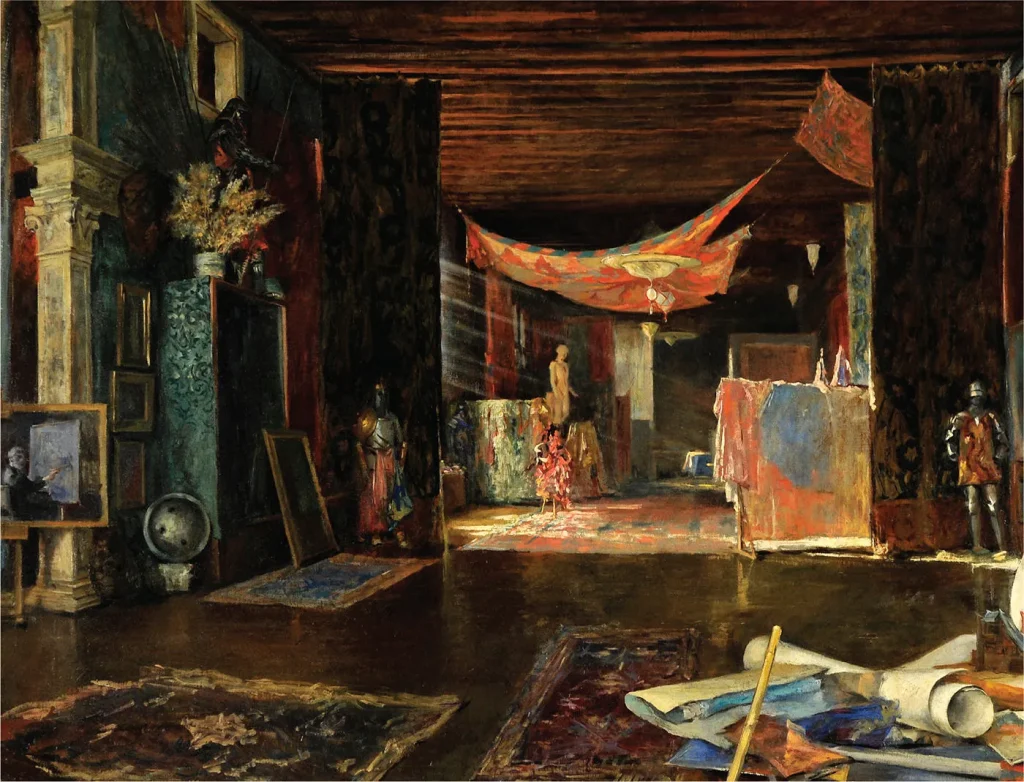
Pesaro degli Orfei
Sometime later the family settled in Venice, an important centre for the arts of the time. They rented a palazzo on the Grand Canal. At this time predominantly known as a painter, Fortuny was always in search of the perfect studio. He first bought the attic of the building that is now the museum that bears his name, drawn by its fascinating light–a setting both decadent and inspiring.
Gradually, he acquired the rest of the palace, turning it into his home as well as his workplace. The building is a fine example of Gothic Renaissance architecture in Venice. Known as Palazzo Pesaro degli Orfei, it had long been associated with artistic and creative figures.
Mariano was always passionate about painting, but acquired particular renown for his work in stage design. In 1892 he developed a fascination with the operas of Richard Wagner, after seeing productions in Paris.

Soon after he travelled to Bayreuth in Germany, the spiritual home of Wagnerites where the composer designed a theatre specifically for his musical epics. Fortuny acquired a driving interest in theatre design. Among the many patents he registered is one for a widely recognised lighting system known as the Fortuny Dome. His multi-faceted creativity has led to his being dubbed the Leonardo da Vinci of his time—a painter, photographer, lighting designer, dedicated collector and creator of fabric and dresses.
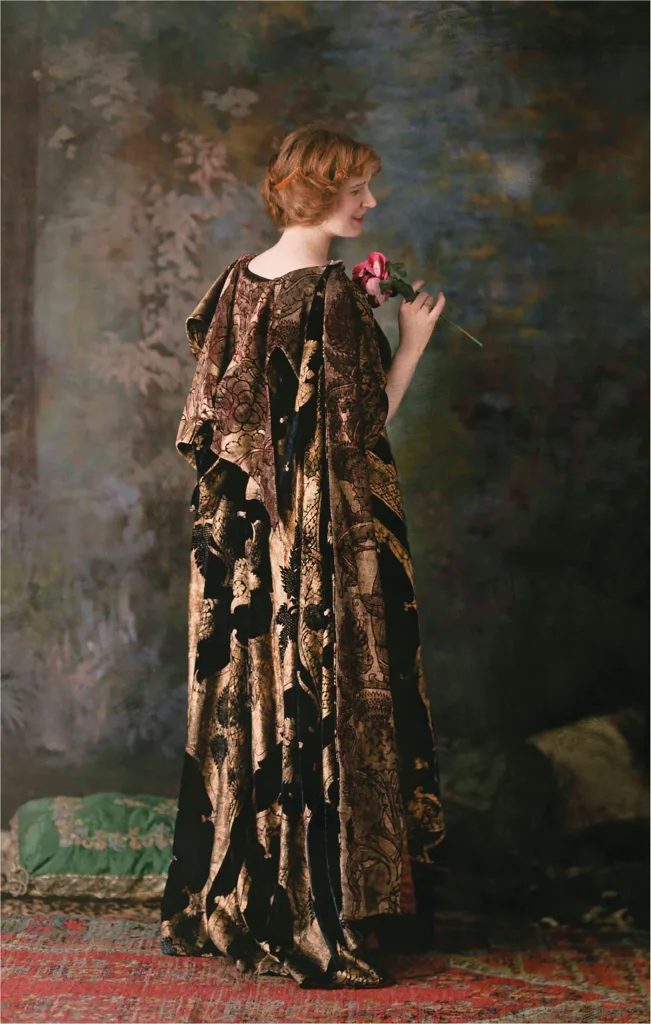
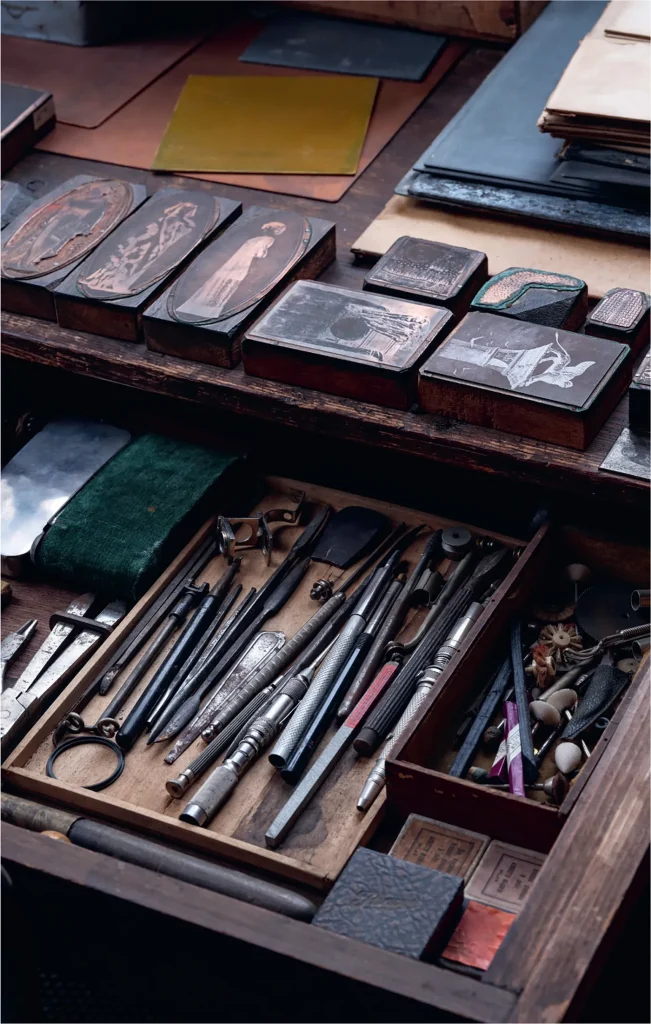
In 1897, on a trip to his former home city of Paris, he met his muse and future wife, Henriette Negrin who was an experienced dressmaker. They started an innovative workshop for textile printing on silk and velvet, whose products would bring the Fortuny Venise brand worldwide fame. Mariano was a born experimenter, having dabbled in various different dyeing techniques in childhood. After Henriette moved into the Venice palace in 1902, they began developing fresh ways of creating shawls, scarfs, capes, cloaks, dresses, theatrical costumes and furnishing fabrics.
The couture house bearing the Fortuny name was founded in 1906.
They created the famous Delphos gown, a pleated silk dress inspired by a statue from Ancient Greece, the Charioteer of Delphi. When patenting the design, Mariano named his wife as its inventor. In textile terms, Henriette was always more interested in design and Fortuny in technique. The silk of the Delphos garment captures light beautifully, shifting in tone with every movement. Glass beads were sewn along the edges to help the fabric fall gracefully and retain its form. For its time—an era when the wearing of corsets was the norm—this remarkably delicate creation, revealing the contours and movements of the body beneath, was truly revolutionary.
When Henriette had moved in with Mariano in 1902, she had been in the process of divorcing another man. The lovers did not marry until 1924, but were together until Mariano’s death in 1949. Henriette survived him until 1977, after which the House of Fortuny—today the Fortuny Museum—was donated to City of Venice in accordance with her will, which stipulated that the space would be ‘used perpetually as a centre of culture in relation to art’. Part of the house been preserved to evoke the atmosphere of a home still alive with the couple’s presence.
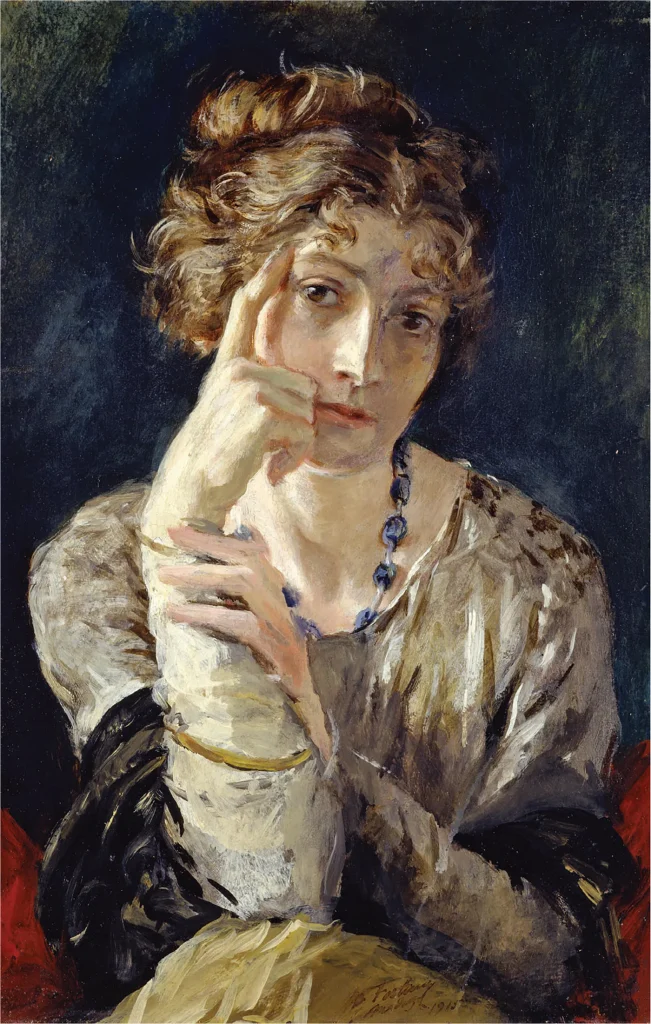
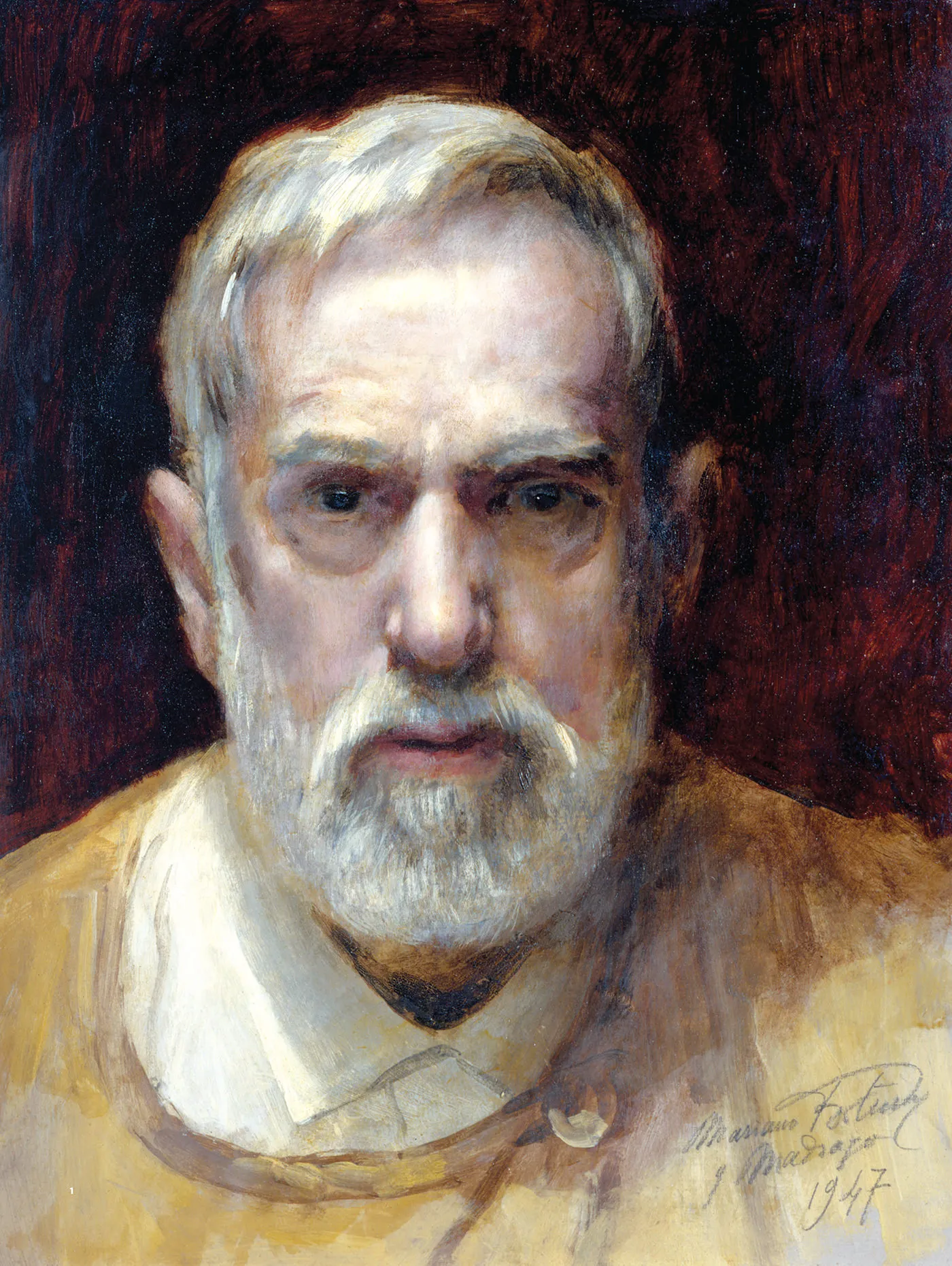
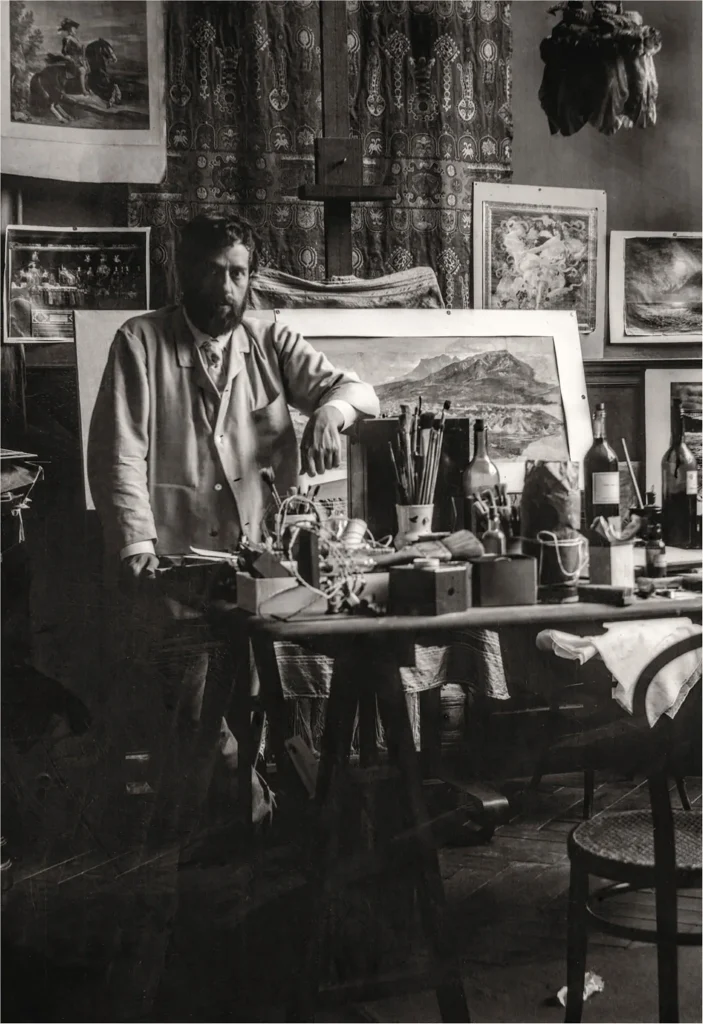
Mariano Fortuny y Madrazo


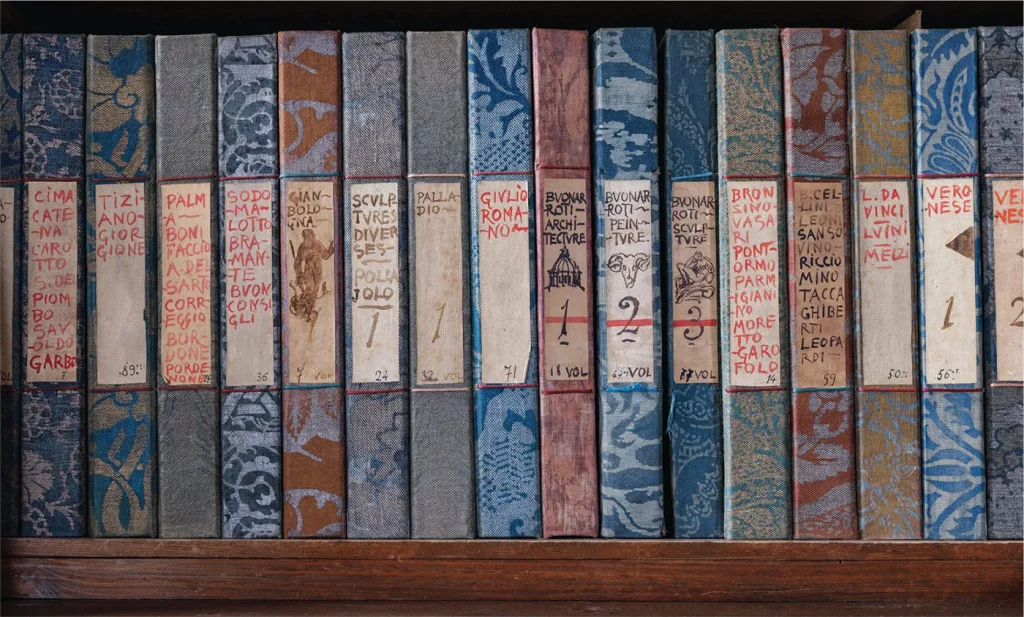
The library invites visitors on a journey through Mariano’s endlessly curious mind. He never indulged in nostalgia; instead he reinterpreted the past in a distinctly modern way. Eccentric and wide-ranging in his interests, Mariano Fortuny y Madrazo possessed the rare ability to translate his curiosity into form endowed with artistic life. The archives and material treasures he left behind remain a testament to his timeless creative spirit.
fortuny.visitmuve.it
The author would like to thank Cristina da Roit and Leonardo Manera from the Fortuny Museum for their generous support and insights.
Source: ALIVE: İHİB’s Magazine of Anatolian Rugs and Kilims, January 2026, pp. 60–65.